Tickets, options and how to choose
Tiwanaku tour from La Paz: what to book
What the guided Tiwanaku day tour from La Paz includes, what you pay for on the day, how it compares with other tours or the minibus, and who it suits.
See Tiwanaku trips on GetYourGuide ↗Quick answer
Book the guided day tour if you want hotel pickup in central La Paz, a Spanish and English guide and no logistics. It runs 7 to 8 hours and covers two sites and two museums. The site entrance fee and lunch are not included: you pay both on the day, in cash. Cancellation is free up to 24 hours before, and you can reserve now and pay later. It is not suitable for people with mobility impairments.
Three ways to visit
| This guided tour | Other tours | On your own | |
|---|---|---|---|
| Transport | Hotel pickup, city centre | Varies by operator | Minibus or private car |
| Guide | Spanish and English | Varies by operator | Not included |
| Site entry | Paid on the day, cash | Often included | Paid at the site, cash |
| Lunch | Optional, paid on the day | Varies by operator | Food in the town |
| Cancelling | Free to 24h, via GetYourGuide | Operator's terms | Nothing to cancel |
What you're booking
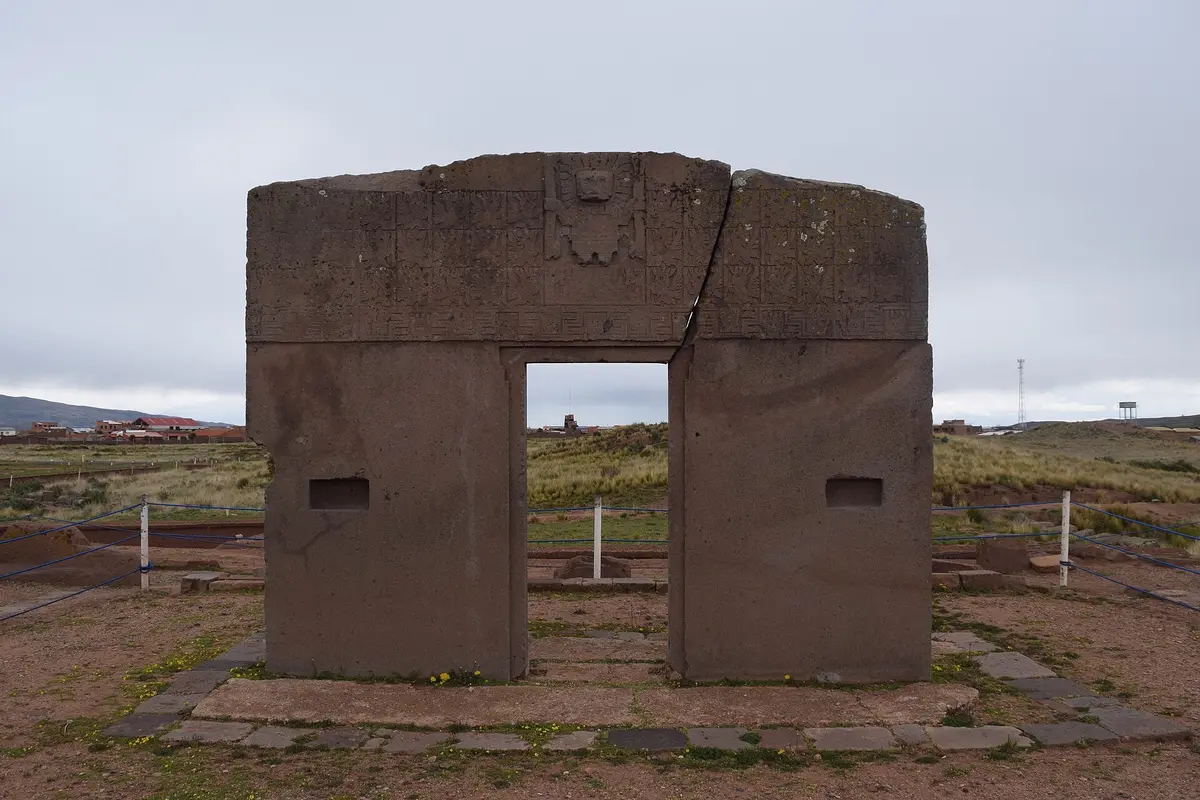
This is a guided day tour, not an entry ticket. The provider, Buhos Tours, collects you from your accommodation in central La Paz, drives you about 70 km to Tiwanaku, and brings you back to the city centre at the end of the day. A live guide takes you round two sites and two museums: the museums and the Kalasasaya temple first, then Puma Punku after lunch. The guide speaks Spanish and English, and a private group is available. The whole day takes 7 to 8 hours. The booking calendar shows the starting times, and your confirmation shows your pickup time.
What's included, and what you pay on the day
The tour covers hotel pickup, return transport, the bilingual guide and hotel drop-off. It does not cover the entrance fee to the archaeological site, and it does not cover lunch. You pay both on the day. The official site takes cash only, so bring cash from La Paz. Lunch is optional: it is a break at a restaurant your guide chooses. The entrance fee is set by the site, not by the tour, so check the current figure on the official site before you go.
- Included: hotel pickup, return transport, bilingual guide, hotel drop-off
- Not included: the site entrance fee, and lunch (optional)
- Cash: the official site accepts cash only
- Passport: a copy is accepted
How the day runs
Plan for 7 to 8 hours in total. The site is about 70 km from La Paz, and the drive takes up a good part of the day. Once there, the order is the museums and the Kalasasaya with your guide, then a lunch break, then Puma Punku. The guide explains the history and the excavations as you walk. Pickup is from central La Paz only, and the van returns you to the centre afterwards. Eat breakfast before pickup, because the first stops come well before lunch.
Guided tour, other tours, or on your own?
A guided tour from La Paz solves transport and gives you a guide. Other operators run private and shared tours from La Paz, El Alto and Tiwanaku, and the official site says most include transport, entry, a guide and a snack, though each operator sets its own inclusions. On your own, the official site lists minibuses from La Paz and private transport for groups. You then pay your entry in cash and arrange the rest yourself. Going alone suits you if you want your own pace and are comfortable arranging the return trip.
Why a guide helps here
Tiwanaku does not explain itself. No standing buildings survive, the Kalasasaya walls are largely rebuilt, and the Gateway of the Sun is thought to have been moved from its original spot. Dating is still argued over: one estimate puts the founding around AD 110, and the collapse is placed around AD 1000 for reasons researchers still debate. A guide tells you which parts are original, which are reconstruction and which readings are theory. If you prefer to read and wander, going alone works, but you will need your own background first.
Language and group size
The guide speaks Spanish and English. If you travel in German, French, Dutch or Portuguese, this tour does not list those languages, so expect the commentary in English or Spanish and read ahead if you want more detail. A private group is available if you want your own pace or want your family or friends together. Group size for the standard tour is not stated, so do not assume a small group.
Booking ahead and cancelling
Booked through GetYourGuide, the tour has free cancellation up to 24 hours before the start, with a full refund, and you can reserve now and pay later. Choose your date on the booking calendar, which shows availability and starting times. There is no seat category to choose and no separate ticket to collect, because the site entrance is bought on the day. If your date is fixed, book once you know it, and use the free cancellation window if your plans move.
What to bring, and the altitude
Bring sunglasses, a sun hat, sunscreen, a camera, a jacket, cash and your passport or a copy. Tiwanaku is about 3,800 metres above sea level, higher than central La Paz at about 3,650. Altitude sickness can start within 10 hours of a rapid ascent and usually eases within two days; typical signs are a headache with nausea, dizziness or poor sleep. The usual advice is to avoid strenuous effort and alcohol for the first day or two, drink fluids and rest. Anyone with heart or lung problems should ask a doctor first.
- Sun: hat, sunglasses, sunscreen
- Cold: a jacket
- Money: cash for the entrance fee and lunch
- Photography inside is listed as not allowed on the tour: ask your guide where that applies
What you'll see
The Kalasasaya is a walled temple court that holds the Gateway of the Sun and the Ponce and Fraile monoliths. The semi-subterranean temple beside it has carved stone heads set in its walls, 175 by the official count. The Akapana is a stepped platform, and Puma Punku is a platform faced with huge cut blocks. The two museums hold the Bennett Monolith and pottery from the excavations. Much of what stands has been rebuilt, because the site was looted and quarried for centuries.
Read next: Tiwanaku monoliths: where to see each one
Other options on the official site
The official site's menu also lists a night tour and community tourism under its Tourism section. The night visits run on dates the site announces through its own channels, and they are separate from a daytime tour, so check the official pages for dates and booking details if an evening visit appeals. The official FAQ also lists food and lodging in the town of Tiwanaku, with breakfast, lunch and dinner available, plus hotels, hostels and cabins, if you would rather stay near the site than return to La Paz the same day.
Who this isn't for
Skip this tour if you have a mobility impairment: it is listed as not suitable for people with mobility impairments. Skip it if you want Lake Titicaca on the same day, because this tour covers Tiwanaku only, and look for a combined tour instead. If you expect standing temples, adjust your expectations: no buildings survive and some walls were rebuilt. And if a 7 to 8 hour day sounds long, consider that most of the sightseeing is outdoors at altitude.
Frequently asked questions
How do I get to Tiwanaku from La Paz?
Most visitors take a guided day tour with hotel pickup in central La Paz. The site is about 70 km away. The official site also lists minibuses from La Paz and private transport for groups, with cash only at the entrance.
Is the entrance fee included in the tour?
No. The site entrance fee and lunch are paid separately on the day. The official site takes cash only, so bring cash with you from La Paz.
How long is the Tiwanaku tour?
The tour takes 7 to 8 hours, including the drive, the guided visit and a lunch break. Your confirmation shows the pickup time for your date.
Can I cancel the Tiwanaku tour?
Yes. Booked through GetYourGuide, cancellation is free up to 24 hours before the start, with a full refund. You can also reserve now and pay later.
What language is the guide?
The guide speaks Spanish and English, and a private group is available. German, French, Dutch and Portuguese are not listed for this tour.
Is Tiwanaku a UNESCO World Heritage Site?
Yes. It was inscribed in 2000 as Tiwanaku: Spiritual and Political Centre of the Tiwanaku Culture.
Sources